Pedro Albizu Campos Digital Resource Collection
Colección de Recursos Digital Pedro Albizu Campos
Available now on Amazon!
〰️
Available now on Amazon! 〰️
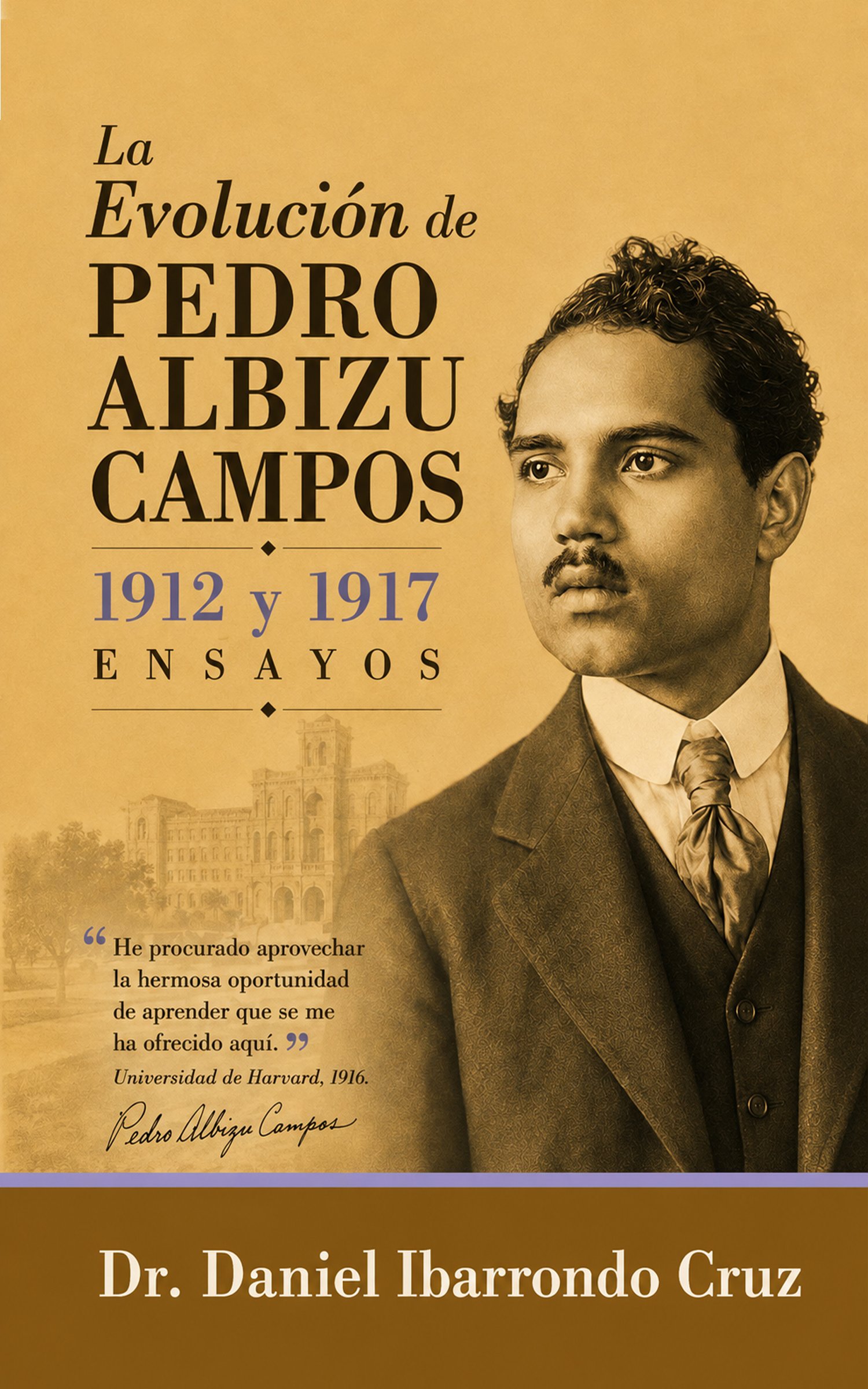
La evolución de Pedro Albizu Campos: ensayos de 1912 y 1917 es un texto introductorio que invita a repensar al joven Albizu cuando era estudiante en la Universidad de Harvard. A través de sus propias palabras, plasmadas en documentos de archivo, explica su perspectiva sobre las relaciones entre Estados Unidos y Puerto Rico a medida que esta evoluciona. El texto introductorio compara sus ensayos de 1912 y 1917, "Porto Rico Through a Transition" y su ensayo de 1917 "Porto Rico and the War." El ensayo de 1912, leído en su graduación de la Escuela Superior de Ponce, estuvo desaparecido por más de cien años. El Dr. Ibarrondo Cruz lo descubrió en 2022. El texto introductorio es un estudio de caso sobre la descolonización, a medida que Albizu evoluciona desde sus ideas en la Escuela Superior de Ponce hasta sus perspectivas en la Escuela de Derecho de Harvard. El gobierno colonial estadounidense en Puerto Rico enviaba cada año a 45 estudiantes puertorriqueños a estudiar en Estados Unidos para "americanizarlos." A Albizu le enseñó otra cosa: las contradicciones de la democracia, la independencia, la autodeterminación y la libertad tal como se practicaban en Estados Unidos y se proclamaban para Puerto Rico.
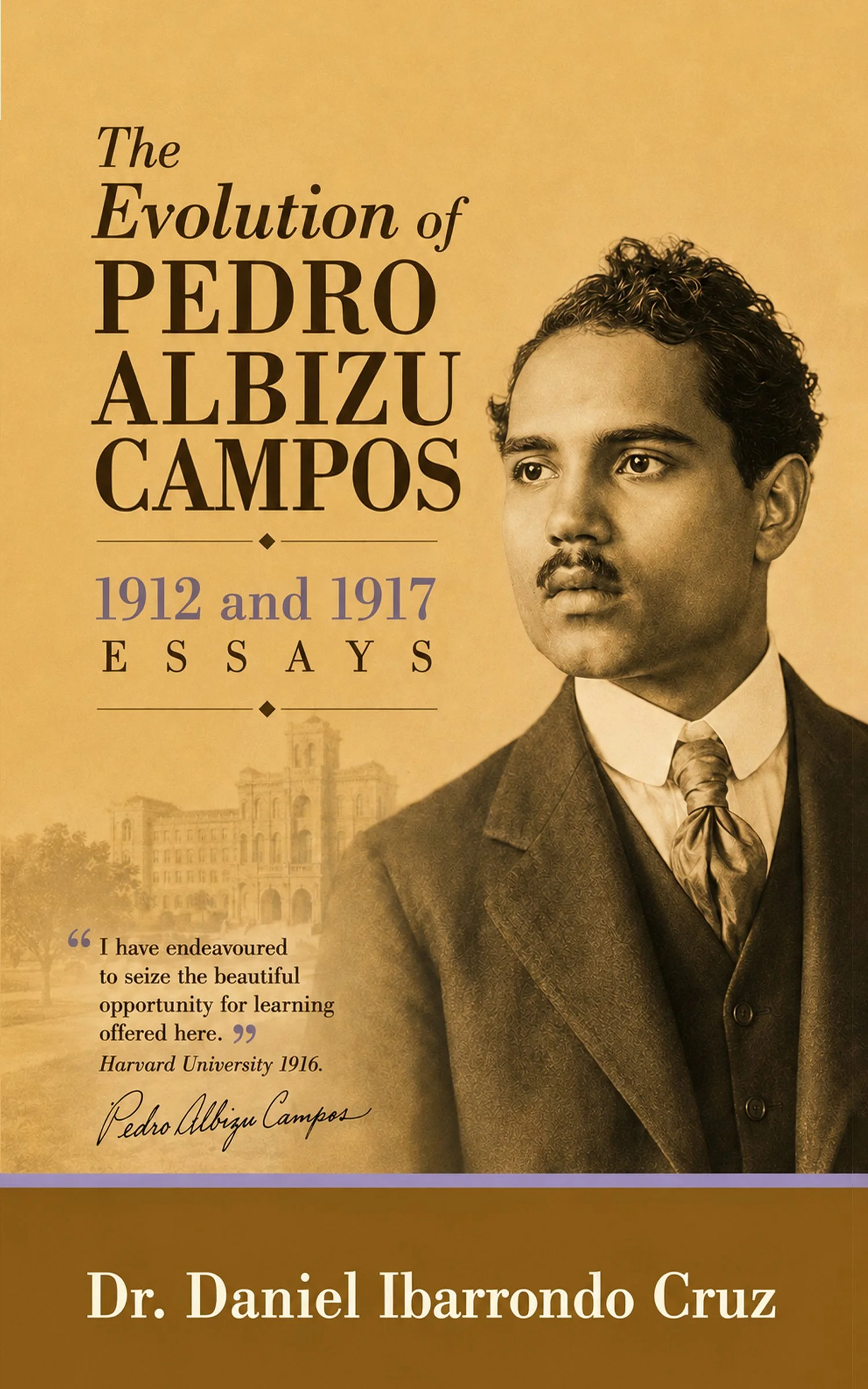
The Evolution of Pedro Albizu Campos 1912 and 1917 Essays is an introductory primer to rethinking a young Albizu when he was a Harvard University student. Through his own words, his archival documents, he explains his viewpoint on U.S.-PR relations as it evolves. The primer compares his 1912 and 1917 essays, "Porto Rico Through a Transition" and his 1917 essay "Porto Rico and the War." The 1912 essay, read at his Ponce High School graduation, was missing for more than a hundred years. Dr. Ibarrondo Cruz discovered it in 2022. It's a case study on decolonization as Albizu evolves from his Ponce High School thoughts to his Harvard Law School viewpoints. The U.S. colonial government in Puerto Rico sent 45 Puerto Rican students every year to study in the U.S. to become "Americanized." It taught Albizu something else, the contradictions of democracy, independence, self-determination, and liberty as practiced in the U.S. and proclaimed to be in Puerto Rico.
¡Disponible en Amazon!
〰️
¡Disponible en Amazon! 〰️
The Pedro Albizu Campos Digital Resource Collection opens a window into one of the most formidable chapters in Puerto Rican history. For the first time, the public can explore a rich body of primary source documents that reveal the formative years of Pedro Albizu Campos, Puerto Rico’s most prominent nationalist leader and independence patriot.
These materials, located in the “Digital Collection” section, are the result of extensive archival research across some of the most important university repositories: the Harvard University Archives, the Historical and Special Collections at Harvard Law School, and the Archives and Special Collections at Houghton Library, as well as archival holdings in Ponce, Puerto Rico.
A Story Hidden in Plain Sight
For decades, much of Albizu’s time at Harvard remained just out of reach. Harvard University’s policy of sealing official records for 50 years, and student records for a minimum of 80 years, meant that the full archival picture, comprising over 100 documents, records, letters, and forms, did not become available to researchers until 2003, eighty years after his law degree was conferred on February 26, 1923. As a result, major biographies published before 2003 were written without accessing these essential primary sources. Anything published after 2003 did not include these documents, until now.
What the Record Reveals
Albizu arrived at Harvard College in 1913 as a trailblazing Puerto Rican student. He began his academic career studying agriculture at the University of Vermont (1912–1913) then transferring to Harvard College (1913–1916), where he earned his Bachelor of Arts degree with chemistry as a leading subject. He went on to enroll at Harvard Law School (1916–1921). His studies were interrupted by voluntary service in the U.S. Army during World War I.
After returning to law school on September 27, 1919, financial hardship forced him to return to Puerto Rico without having yet to pass the final exams for his corporations and evidence courses. In the summer of June 1922, he was allowed to take the two final exams in Puerto Rico and successfully passed them after multiple previous attempts.
It was during his years at Harvard Law School that he met Dr. Laura Meneses del Carpio, a Peruvian scholar at Radcliffe College, whom he married in 1922. Together, they had three children. Albizu had an out-of-wedlock child.
Separating History from Legend
Over the past half century, a number of compelling but unverified narratives about Albizu’s Harvard years have taken root, circulating through books, articles, social media, and pamphlets. These accounts have portrayed him as earning top academic grades, being the first Puerto Rican to graduate from Harvard Law School, being denied the role of valedictorian due to racism, obtaining more than four Harvard degrees, working as a chemical engineer, speaking up to eight languages fluently, holding two doctoral degrees, and even drafting the Irish Constitution after meeting Éamon de Valera at Harvard. Directly and contextually through his own archives, Albizu speaks and tells a completely different narrative.
“Albizu’s archival documents, located in the Digital Collection section, invite you to engage directly with the historical record. What emerges is a more factual, human and, ultimately, a more remarkable story of Albizu’s evolution during his formative years.”
“Los documentos de archivo de Albizu, ubicados en la sección de Colección Digital, le invitan a interactuar directamente con el registro histórico. Lo que surge es una historia más factual, humana y, en última instancia, más extraordinaria de la evolución de Albizu durante sus años formativos.”
Albizu, his Voice, his Experiences, Through his Archival Documents
Digital archival and humanistic scholarship involves producing, preserving, and interpreting the cultural record. Cataloging the educational and research value of the archival documents of Pedro Albizu Campos is essential. Through his own voice, much of the archival material in this collection provide a humanistic perspective of Pedro Albizu Campos that was previously unknown to the general public. These documents and their contextualized and detailed research provides new revelations of Albizu that dispel myths accepted as “facts” for more than half a century. These archival documents were never collectively studied and researched until now. The PAC-DRC provides, among others, the opportunity to engage with Albizu’s archival documents and his voice and experiences through his documents. The archival documents are provided Courtesy of Harvard University Archives and the website and its contents are provided courtesy of Dr. Daniel Ibarrondo Cruz, author, researcher, and President of the FundaciónPedro Albizu Campos.


Albizu, su Voz, sus Experiencias, a través de sus Documentos de Archivo
La labor archivística digital y humanística implica producir, preservar e interpretar el registro cultural. Catalogar el valor educativo y de investigación de los documentos de archivo de Pedro Albizu Campos es esencial. A través de su propia voz, gran parte del material de archivo de esta colección ofrece una perspectiva humanística de Pedro Albizu Campos anteriormente desconocida para el público en general. Estos documentos y su investigación contextualizada y detallada ofrecen nuevas revelaciones sobre Albizu que desmienten mitos aceptados como "hechos" durante más de medio siglo. Estos documentos de archivo nunca habían sido estudiados e investigados de manera conjunta hasta ahora. El PAC-DRC ofrece, entre otras cosas, la oportunidad de interactuar con los documentos de archivo de Albizu y con su voz y experiencias a través de ellos. Los documentos de archivo se ofrecen por cortesía de Harvard University Archives, y el sitio web y su contenido se ofrecen por cortesía del Dr. Daniel Ibarrondo Cruz, autor, investigador y Presidente de la Fundación Pedro Albizu Campos.

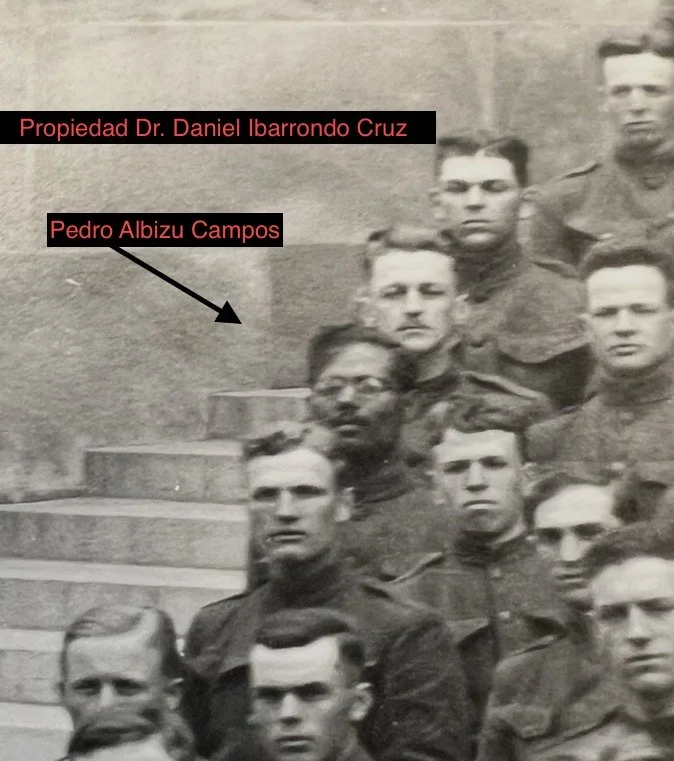
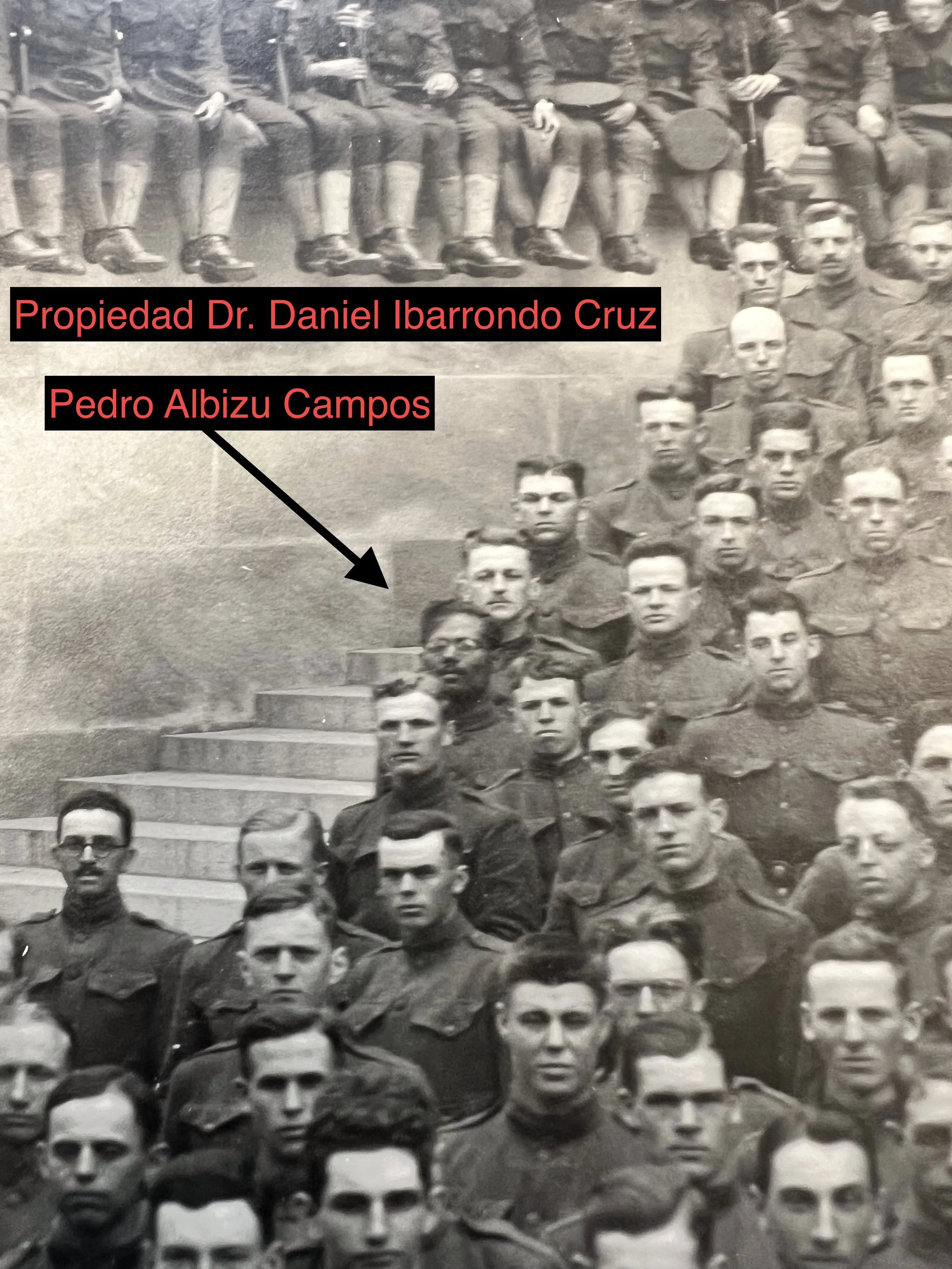
Pedro Albizu Campos R.O.T.C. Harvard University - Memorial Day May 30, 1917